
If you saw One for the Pot and remember how they stomped on the floor and a hidden compartment opened, that was actually
controlled by our lighting board.
Nana’s Naughty Knickers has some similar surprises but I will not include them here so as to not spoil the surprise.
But if you wondered how that is done, the picture on the next page shows the tech behind it.
What I can share is that behind some of these clever technical moments is one of our dedicated volunteers, Pete Learoyd, who
has been helping bring a bit of theatre magic to life.
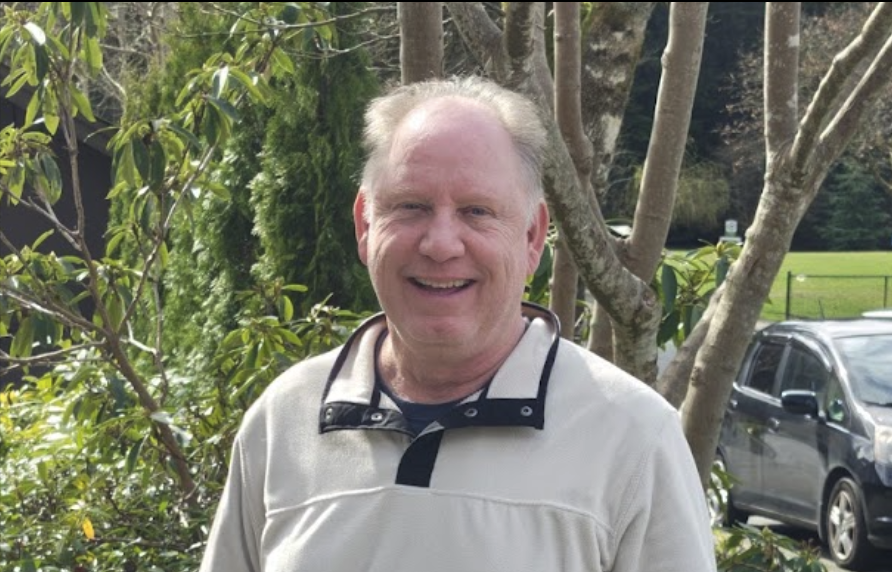
Pete has been part of our technical team for about a year and a half now, helping bring some of these behind-the-scenes moments to life. Like many of our volunteers, he came to the theatre from a very different day-to-day world.
Pete Learoyd is our feature In the Spotlight.
In Conversation with Pete Learoyd
Glen: So Pete—what drew you into volunteering here, and what keeps you coming back?
Pete: For me, it’s a really different kind of outlet compared to my day job. I spend a lot of time working at a computer and dealing with fairly structured, sometimes high-pressure work.
Being involved in theatre lets me use a completely different part of my brain—it’s more hands-on, creative, and a bit experimental. You get to build things, try ideas, and see them come to life in front of an audience.
That contrast is what really hooked me. It’s creative in a way that feels fun and collaborative, and you’re working toward something tangible that people get to experience.
Glen: For anyone reading who might not be familiar, “technical theatre” is really everything behind the scenes that makes a
production come together—sets, lighting, sound, props, costumes, and all the moving parts that support what’s happening on stage.
Pete, where have you found yourself fitting into that world so far?
Pete: I’ve always enjoyed carpentry and construction, so naturally I was interested in the set side of things—but we’ve got a great
group of volunteers who are very good at getting the sets built and on stage.
So, I started spending more time around the lighting side, and that’s where things got interesting for me. Modern lighting boards use digital signals to tell lights exactly how to respond —timing, intensity, movement—and I realized those same signals can be used to trigger other things too.
That led me toward the more interactive elements—especially what we call “practicals,” which are set elements that can be triggered or controlled electronically, often from the booth. So now I find myself somewhere in between lighting and set, trying to connect the two.
At the end of the day, it’s really the actors who bring the show to life—but the technical side helps support that and, hopefully, adds those extra moments that make the experience more immersive for the audience.
That’s where it gets fun—figuring out how to make something happen at just the right moment so it enhances what’s happening on stage. If it makes the audience pause and think “how did that happen?”, then we’ve probably done it right.
Glen: So while everyone else is building the set… you’re figuring out how to make it do things it probably shouldn’t?
Pete: Exactly—just in a controlled and hopefully intentional way.
I actually noticed that about myself recently when I was at an escape room with my family. Everyone else was focused on solving the puzzles, and I was more interested in how everything worked—the hidden triggers, the electronics, how things were revealed.
It’s very similar to theatre. You’re creating an experience, and a lot of the magic comes from what the audience doesn’t see. That’s the part I really enjoy—figuring out how to build those little moments of surprise into a production.
Glen: It sounds like a lot of what you’re doing involves creative problem-solving—figuring out how to make something look a certain way on stage, even if it’s not built the way it normally would be in the “real world.”
Have you had any moments where that really clicked for you?
Pete: Yeah, that was actually one of the early realizations for me. Coming from a more traditional construction or carpentry mindset, you’re used to building things properly—level, square, and functioning the way they’re “supposed” to.
But in theatre, you’re not always building for real-world use—you’re building for effect.
I remember working on a piece where we needed a drawer to slide open on cue. My first instinct was to make sure everything was perfectly aligned and smooth, but then I realized it actually worked better if it wasn’t perfectly level. By adjusting it slightly, gravity could do part of the work and help the drawer open reliably when triggered.
That was a bit of a mindset shift for me. You’re not always trying to build something perfectly—you’re trying to build the illusion of something happening at the right moment.
And that’s what I find really interesting—it’s that combination of practical building, a bit of creativity, and sometimes bending the “rules” just enough to make the effect work.
Glen: So all those years of being told to build things level… and now you’re undoing it?
Pete: Pretty much—just selectively and with a good reason this time.
Glen: It sounds like you’ve already picked up quite a bit in a relatively short time. What’s been one of the most interesting—or maybe unexpected—things you’ve learned so far?
Pete: One of the biggest things for me has been realizing just how much coordination happens behind the scenes. From lighting cues to sound to set movement, everything has to line up at exactly the right moment.
You start to appreciate how many moving parts there are—and how important it is that everything works together reliably, especially during a live performance. There’s not a lot of room for improvising when a technical cue is supposed to happen.
It’s also been a great environment for learning by doing. There’s always someone with more experience willing to share what they know, and you pick things up pretty quickly just by being involved.
Glen: Is there anything in particular you’re excited to learn more about or explore further?
Pete: I’d definitely like to keep building on the lighting side, especially understanding more about how the lighting board works and what else can be integrated into it.
There’s a lot of potential there—not just for lighting effects, but for connecting different elements of the show in a more coordinated way.
And beyond that, just continuing to experiment with practical effects—finding new ways to create those small moments that
add something extra to the audience experience.
There’s always another idea to try—it’s just a matter of figuring out how to make it work safely and on cue.
Glen: Looking back over your time with the theatre so far—do you have a favourite moment that stands out?
Pete: I think for me it’s those moments during a live performance when something you’ve worked on actually happens the way it’s supposed to—and you can hear or feel the audience react.
It might be a small effect or a quick moment, but when it lands and people notice it—even subconsciously—that’s pretty rewarding.
There’s also something about being part of the full production. You’re working behind the scenes, but you still feel connected to what’s happening on stage and the overall experience.
Glen: For someone who might be thinking about getting involved—especially on the technical side—what would you say to them?
Pete: I’d say just get involved and give it a try. You don’t need to have all the skills upfront—there are lots of ways to contribute, and you can learn as you go.
It’s a really supportive environment, and there’s a good mix of people with different experience levels. If you’re curious and willing to help out, there’s definitely a place for you.
And it’s a great way to do something hands-on and creative, especially if your day-to-day work doesn’t always give you that opportunity.
Glen: And what are you looking forward to next?
Pete: I’m looking forward to continuing to build on what I’ve learned—especially exploring more ways to integrate lighting and practical effects into productions.
There’s always another idea to try—it’s just a matter of figuring out how to make it work safely and on cue.
And of course, just being part of future shows and seeing how everything comes together again.
Glen: Thanks, Pete. It’s always great to shine a light—no pun intended—on the people behind the scenes who make these productions so engaging. Next time you see something unexpected happen on stage, there’s a good chance Pete had a hand in it.
